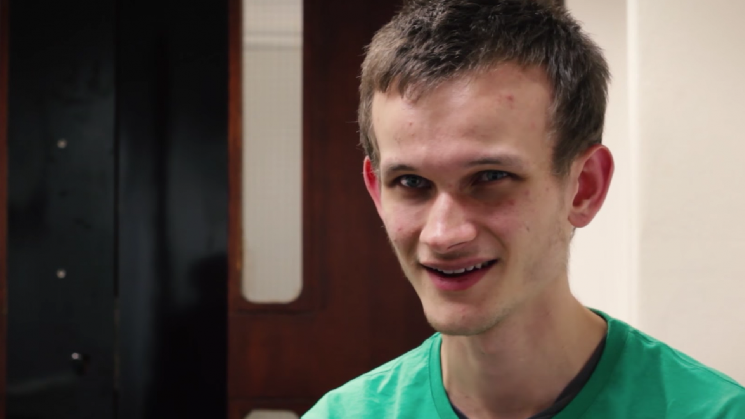
Ethereum co-founder Vitalik Buterin said Sunday that the network he envisions for 2030 may still be called a blockchain, but it would work very differently from today’s version.
In a post titled “The cryptographic world computer,” Buterin described a system combining a blockchain with cryptographic proofs and networks of computers working outside it. The plan through 2030 would change both how much Ethereum can do and what users can independently verify.
Ethereum already lets people send money, trade tokens and borrow through applications that run according to shared rules. The difficulty is making those applications serve more people without making the network too expensive to use or too demanding to check.
Today, a computer fully checking Ethereum repeats the calculations behind its transactions. It checks, for example, that someone sending money had enough to spend and that an application did what its rules allowed.
Repeating that work across many computers helps keep the network honest. It also means adding computers does not automatically let Ethereum handle more transactions, because each is busy checking much of the same activity.
Buterin argues that newer cryptographic tools can break that constraint.
A computer could process transactions and produce a short mathematical proof that it followed the rules. Other computers could check that proof much faster than they could repeat all the original work. Separate spot checks would help establish that the transaction records were still available for anyone who wanted to inspect them.
That would allow different computers to tackle different jobs while still checking one another’s results.
Ethereum’s developers wanted to distribute work this way a decade ago, Buterin wrote, but struggled to ensure every participant had done its part correctly.
“Back then, this was not viable for one primary reason: the missing ingredient was verification.”

Why are these changes needed
Ethereum’s computers repeat much of the same work to check that transactions follow the rules. That helps keep the network honest, but limits how much it gains from adding more computers.
Earlier attempts to divide the work assigned particular tasks to smaller groups. Coordinating those groups added delays, and the wider network could struggle to recover if one failed.
Buterin argues that mathematical proofs offer a way around that problem. A computer doing a job could provide proof that it followed the rules, allowing others to check its answer without repeating the whole calculation.