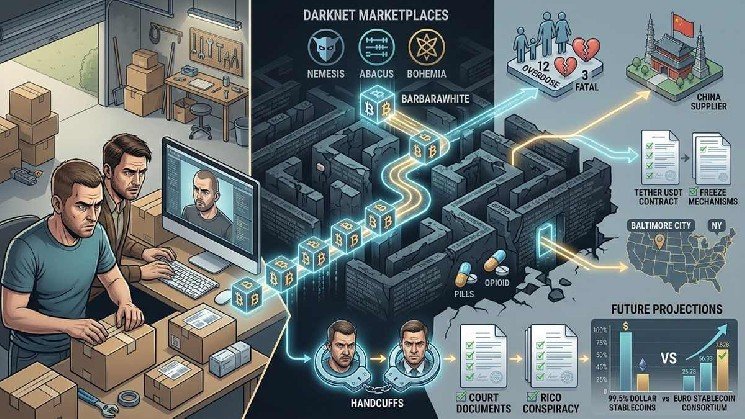
- The U.S. Department of Justice confirmed the arrest of brothers Vladislav and Stanislav Chernyshov for the illicit distribution of synthetic opioids.
- The vendor account “BarbaraWhite” marketed more than 95,000 counterfeit pills on Darknet platforms such as Nemesis, Bohemia, and Abacus since 2020.
- The wallet cluster analyzed by authorities recorded $220,000 in income and $230,000 in outgoing transfers in cryptocurrencies.
Federal authorities and Chainalysis reported that the FBI and the U.S. Department of Justice employed the Bitcoin trail to formally link two Jacksonville residents with a synthetic opioid distribution network on the Darknet.
FBI agents just arrested an alleged darknet market vendor who sold “FENT FREE” nitazenes – an opioid that can be more dangerous than fentanyl – for crypto.
We unpack how agents tracked their suspect down on-chain:
1/5 pic.twitter.com/je6ellSrXy
— Chainalysis (@chainalysis) September 8, 2026
The criminal investigation focused on the digital identity “BarbaraWhite,” a profile active since 2020 in various underground markets. According to the FBI affidavit, this merchant promoted counterfeit pills under the label of fentanyl-free products, although official chemical analyses determined they contained nitazenes, a class of high-potency synthetic opioid.
Court records attribute to this network the alleged connection to at least 12 overdose cases in U.S. territory, three of which were fatal. According to the official report from authorities, the criminal scheme relied on coordinated postal shipments and the collection of funds through digital assets to maintain an appearance of operational anonymity.
On-chain Forensic Analysis and Financial Connections
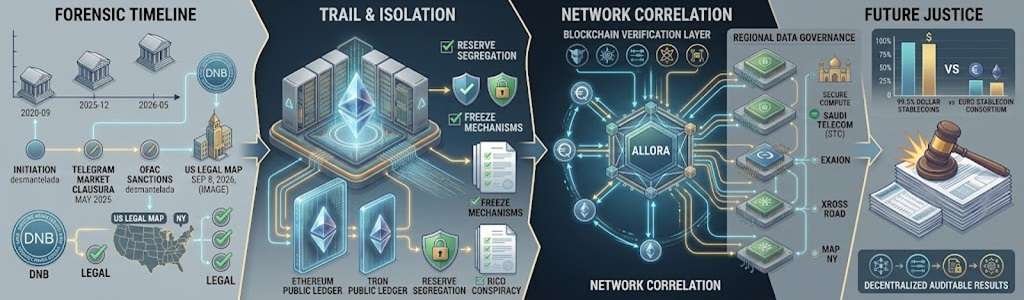
Forensic analysis of the blockchain made it possible to map the addresses associated with buyer payments and their subsequent dispersion. Data from Chainalysis indicate that investigators managed to trace fund withdrawals from the Bohemia, Nemesis, and Abacus markets to wallets under the operational control of the suspects.
Capital outflows included direct payments of $7,210 directed to a China-based chemical supplier, an entity designated by investigators as the alleged source of the precursors to manufacture nitazenes. Likewise, records reflected periodic payments to postal franking services settled in cryptocurrencies to manage the packages within the country.
The on-chain transfers were cross-referenced with data from mobile payment accounts belonging to Stanislav Chernyshov, connecting the pseudonym’s activity with a physical person. Court documents indicate that this cross-referencing of financial information, added to undercover purchases and physical surveillance, was decisive in dismantling the criminal operation.
The legal process opened following the arrest of Vladislav and Stanislav Chernyshov is now unfolding in the federal court system, where prosecutors will present the technical evidence obtained from the Bitcoin ledger. In the event of a formal conviction, both face stipulated sentences of up to 20 years in prison under charges of conspiracy to distribute controlled substances.