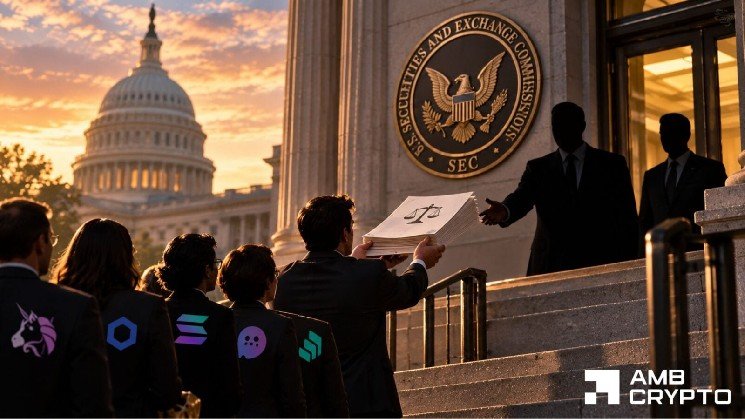
The crypto industry wants more concessions from the SEC in the proposed “Innovation Exemption” framework.
On the 22nd of September, Miles Jennings, General Counsel at VC firm a16z Crypto, alongside lobby group DeFi Education Fund, wrote to the SEC and made two major requests.
First, the firms are requesting regulatory relief for decentralized exchanges (DEXes), applications that access them, alongside the developers behind them.
We recommend, as its next steps in advancing Project Crypto, that the SEC clarify the circumstances in which developers of decentralized exchange protocols (DEXs) and the apps that provide access to them (DEX Apps) fall outside the Exchange Act’s exchange registration requirements.
This reads like developer protections, a key policy push that was fiercely contested in the stalled CLARITY Act. In fact, some of the developer protections in the revised draft were watered down.
According to Jennings, such a move would “extend regulatory clarity to truly permissionless systems.”
Worth noting that the industry seeks this relief to hold even if the platform handles tokenized securities; provided it’s fully non-custodial (doesn’t control user funds), it should be exempted from the Exchange Act.
Secondly, the venture firm proposed a different approval pathway for crypto asset trading platforms (CTPs) that function as traditional intermediaries and control user funds.
Why the industry needs DeFi clarity
For perspective, the CFTC offered similar relief to “passive software” like Phantom from being classified as an introducing broker under the Commodity Exchange Act. But the CFTC only handles derivatives, including perpetual futures.
The relief does not shield a DEX that handles assets that the SEC may classify as securities. In fact, a16z highlighted 2024’s SEC enforcement action plan against Uniswap as the motivation for its push for DeFi clarity.
Since the SEC views tokenized stocks as securities, it will be interesting to see how it reacts to the request and whether it will incorporate it into its Innovation Exemption framework.
However, traditional broker-dealers (including Citadel Securities), represented by SIFMA, had already poked holes in the SEC’s Innovation Exemption proposal. The group may back the second a16z request, but not the exemption relief for DEXes and apps.
Final Summary
- DeFi Education Fund and a16z seek legal protections for DeFi protocols and developers
- SIFMA is cautious about the SEC’s Innovation Exemption plan and could push back against a16z requests