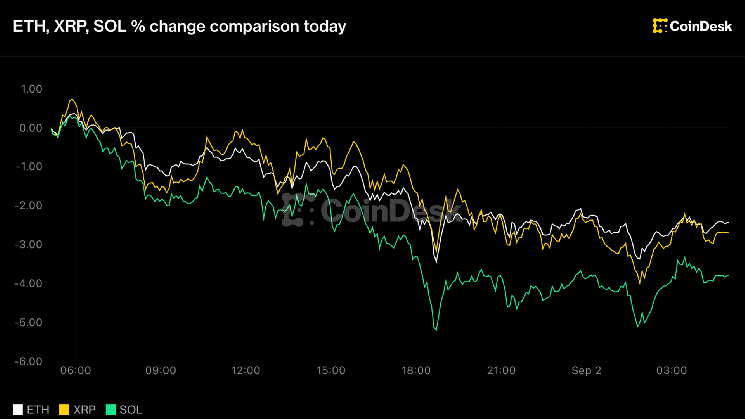
The selling that followed U.S. airstrikes on Iran did not land evenly. Solana and tron each shed more than 3% over the past 24 hours while bitcoin gave up roughly 1%, a spread that says traders cut the fastest-moving positions first and left the base layer largely alone.
Bitcoin changed hands near $77,500 during Asian trading hours on Wednesday.
Solana slipped back to about $100 and tron to roughly 32 cents, the two weakest majors of the session. Ether fell 2% to just above $2,414 and XRP dropped nearly 2% to about $1.35. Dogecoin lost nearly 2% to just above 8 cents and HYPE gave up more than 1% to about $83. BNB was the most defensive of the group with a decline of under 1% at $687, according to CoinDesk data.
However, every one of those names has traded higher over the past hour, a bid that arrived as Asian equity markets took their worst losses.
The macro trigger was oil and the bond market rather than anything native to crypto. Brent crude climbed above $95 as the strikes revived concern about shipping through the Strait of Hormuz, and the U.S. 10-year Treasury yield touched 4.81% overnight, its highest in about three years.
Japan's five-year government bond hit a record yield and the 10-year touched 3% for the first time in three decades. Meanwhile, Japanese stocks fell more than 2% and South Korea's Kospi dropped more than 3%.
Rate expectations are what turn that into pressure on crypto. Traders on the CME FedWatch tool put the odds of a hike at the Federal Reserve's September meeting at 66%, up from about 40% seven days earlier, after Fed Chair Kevin Warsh used Jackson Hole to argue policy may not yet be restrictive enough to tame inflation.
Gold slipped to about $4,296 an ounce in a second straight session of losses, which removes the easy read that money is simply rotating out of risk and into hard assets.
Bitfinex analysts had set the condition before the strikes, arguing bitcoin should consolidate or grind higher "unless there is a pullback across all risk assets that drags BTC lower with it."